Founding florist
Tulipanna
Bondi NSW · est. 1992
A Bondi Road florist since 1992, with seasonal bouquets, arrangements, roses and potted orchids, and a weekly note on what's at market.
Seasonal cut flowerCymbidium hybrids
Orchids are in season in Australia from May to September. In Victoria the season runs June to August. Outside those months most stems are imported, usually from Thailand.Being confirmed
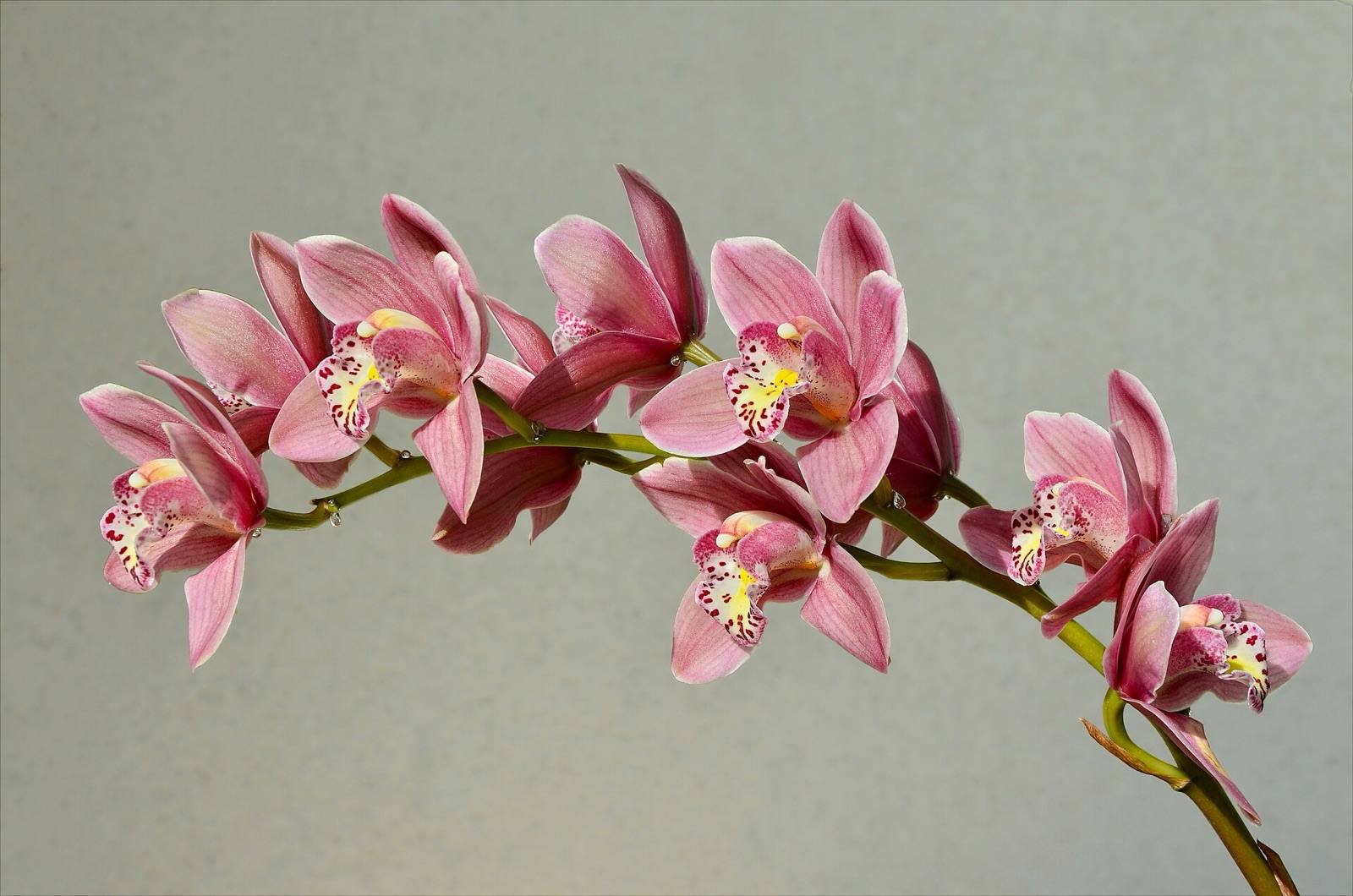
The Australian-grown cut orchid is the cymbidium, which flowers from late autumn through winter and into spring, roughly May to September. Cut spikes last for weeks, which makes them a favourite for winter weddings and long-lived arrangements. Tropical orchids such as dendrobium and phalaenopsis are in florists all year, largely imported from South-East Asia. Melbourne florists treat cymbidiums as a winter speciality, and potted orchids are a separate, year-round trade.
Cymbidiums are sold by the spike or the single bloom and are dear per stem, but last so long they are good value. Being confirmed
Turn the spike around and check every flower, including the lip in the centre. On cymbidiums the lip should be clean and bright, and a lip that has turned dark red or looks marked means the flower is ageing. Being confirmed Petals should be firm and waxy with no see-through patches or brown tips. A single standard spike is enough for a tall vase, while two or three mini spikes suit a shorter one. If a whole spike is too much, buy single blooms in water tubes. Local cymbidiums are the best value in June and July, in the middle of their season.
Bondi NSW · est. 1992
A Bondi Road florist since 1992, with seasonal bouquets, arrangements, roses and potted orchids, and a weekly note on what's at market.
Orchids are not native to Australia, but they're grown here commercially.
Australia's cut orchid crop is almost all cymbidium, grown in shadehouses rather than heated glasshouses. The plants come from the Himalayan region and like 30 to 50 per cent light, so they grow well around Sydney, Melbourne and Adelaide, with a few growers in cooler hinterland spots of south-east Queensland. A mature plant can carry up to eight spikes, each with as many as 20 flowers. Growers tend to be small specialist nurseries, often family run, that sell cut spikes to florists alongside flowering pot plants. A new cross can take up to ten years to reach flowering size.
Out of season, florists bring in imported stems, mostly from Thailand. Ask your florist which you're buying: local stems are usually fresher and have travelled less.Being confirmed
Colours
Varieties to ask for
Vase life
14 to 28 days Being confirmed
Making them last
A single cymbidium spike in a tall, narrow glass is a whole arrangement. For a table, cut individual blooms off an older spike and float them in a shallow bowl, or put one each in small bottles down the middle. They also sit well with winter natives such as banksia and grey eucalyptus, or with protea for something bolder. Flowers stay open for weeks, and when the lowest bloom fades you can snip it off and the rest carries on. Green and burgundy cymbidiums look especially good against dark timber or stoneware.
Traditionally a symbol of refinement and beauty.
Flemington
Best: all yearBeing confirmed
Epping
Best: all yearBeing confirmed
Australian-grown cut cymbidium orchids are in season from about May to September, peaking over winter. Tropical orchids such as dendrobium and phalaenopsis are available all year, mostly imported from South-East Asia.
Cut cymbidiums last two to four weeks in a vase with fresh water, which is longer than almost any other cut flower. Keep them away from heaters and fruit.
Cymbidiums are the main locally grown cut orchid, in standard and mini sizes. Most dendrobium, vanda and phalaenopsis stems in florists are imported, which is why you can buy them in any month.
The ASPCA lists moth orchids (phalaenopsis) as non-toxic to cats, dogs and horses, and names cymbidiums and dendrobiums among pet-safe orchids too. A cat that eats a lot of flower or leaf may still get a mild upset stomach, so keep vases out of chewing range, but orchids are one of the safer choices for pet owners.
Yes. Cymbidiums grow well in Sydney, Melbourne and Adelaide. Keep them outdoors in bright, filtered light, around 30 to 50 per cent, with protection from harsh sun that burns the leaves. They need cooler nights in autumn to set flower spikes, so leave them outside until the spikes appear. Being confirmed