Founding florist
Tulipanna
Bondi NSW · est. 1992
A Bondi Road florist since 1992, with seasonal bouquets, arrangements, roses and potted orchids, and a weekly note on what's at market.
Grown hereProtea spp. (including Protea cynaroides)
Protea is in season in Australia from March to October.Being confirmed
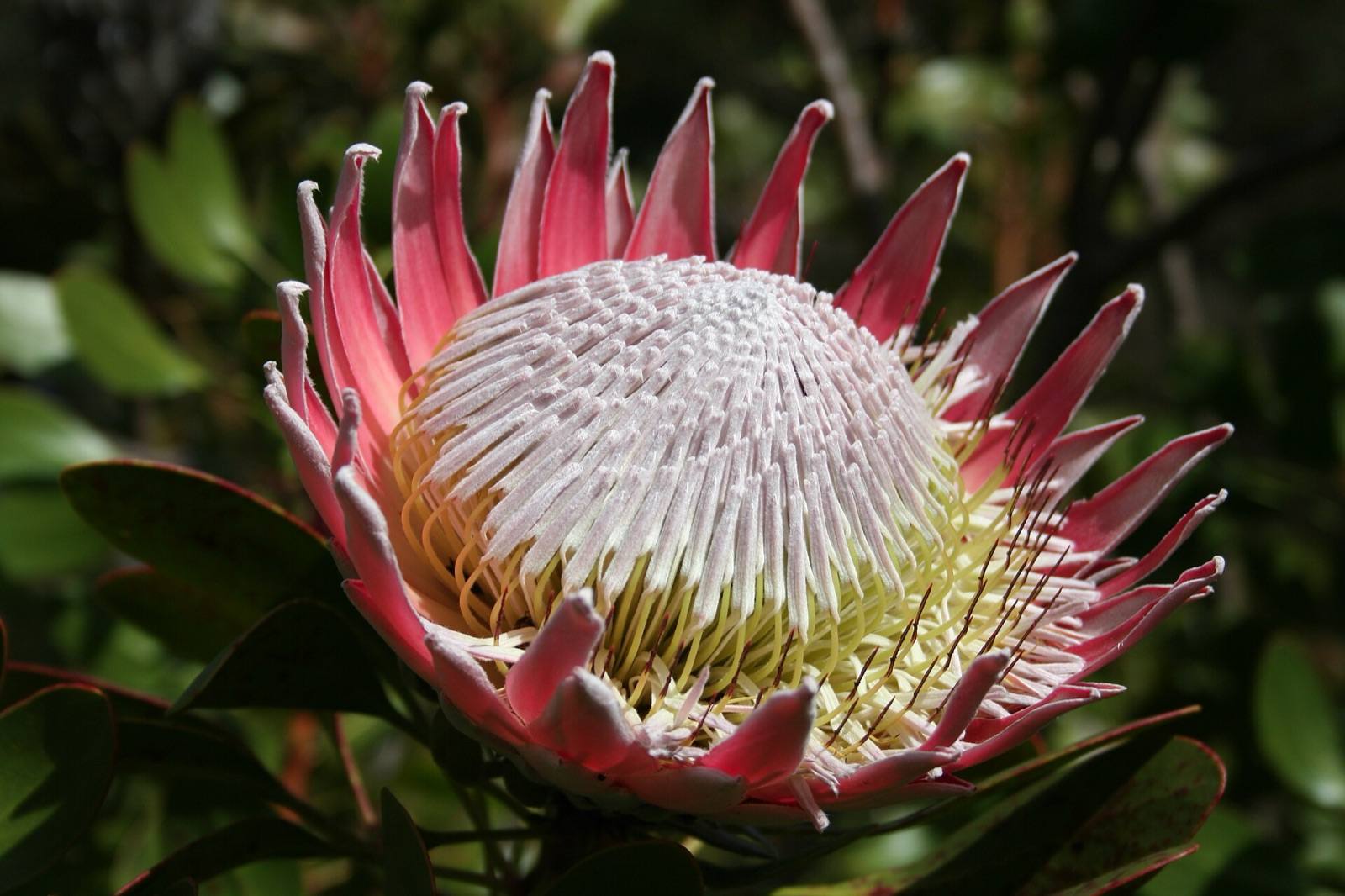
Proteas are South African, but they have long been grown in Australia and are sold alongside natives, often from the same farms, with plantations in every state. The popular Pink Ice flowers from late summer through autumn into winter, and a South Australian grower lists it from March to October. King protea (Protea cynaroides) flowers mainly in winter and spring. The protea industry notes June and July are traditionally slower months for supply. The heads last well in the vase and dry beautifully once they are past their best.
Priced by the stem; big heads such as king protea cost more. Being confirmed
Squeeze the head gently. It should feel firm, with the outer bracts tight and bright, not papery or browning at the tips. Leaves give away older stems: if they are blackened or dull, the stems have been sitting too long. Choose thick, straight stems, as the heavy heads need the support. Two or three king proteas fill a vase on their own, while Pink Ice looks best in bunches of five or more. Pink Ice is plentiful through autumn, and supply often dips in June and July, so autumn is a good time to buy.
Bondi NSW · est. 1992
A Bondi Road florist since 1992, with seasonal bouquets, arrangements, roses and potted orchids, and a weekly note on what's at market.
Protea is not native, but it's grown here and sold alongside Australian natives.
Proteas come from southern Africa and suit the parts of Australia with a similar climate: cool, wet winters, warm, dry summers and sandy, slightly acidic, free-draining soil. Growers such as Protea World at Yundi in South Australia and Proteaflora in Victoria grow them as field crops, and north of Brisbane the plants do better in cooler, drier inland districts. Established plants cope with light frost, down to about minus four degrees. On a protea farm, cutting the flowers doubles as the pruning, which keeps bushes compact and bushy so they keep producing good stems year after year.
Stems at Australian markets are mostly grown here, so when it is out of season it is hard to find. Being confirmed
Colours
Varieties to ask for
Making it last
A single king protea in a heavy stoneware jug makes a statement on its own. Pink Ice mixes easily with other flowers in season through autumn and winter: banksia, eucalyptus and grevillea for a native-style bunch, or late dahlias in March and April for more colour. In spring, pair it with waxflower and kangaroo paw. Use a vase with a heavy base, since the heads are weighty. The bracts hold their shape as they dry, so a finished bunch can simply move to an empty vase and stay for months.
Named after Proteus, the Greek sea god who could change shape, protea is often linked with change and resilience.
Most Australian-grown proteas flower from late summer through winter into spring. Pink Ice, the most common, runs from about March to October, and king protea flowers mainly in winter and spring. Growers say June and July are traditionally a bit slower for supply.
No. Proteas, leucadendrons and pincushions come from South Africa. They are grown on Australian farms in every state and sold with natives like banksia and waratah, which are in the same plant family, so they are often mistaken for natives.
Once the fresh heads are past their best, strip the leaves, tie the stems and hang them upside down somewhere dry and airy, out of direct sun. They keep their shape well, though the colour softens over time.
Yes, with care. Proteas want full sun, sandy, slightly acidic soil that drains freely, and good air flow. Sydney's humid summers and heavy clay soils are the main problems, so plant on a slope, a mound or a raised bed, and avoid fertilisers high in phosphorus, which proteas don't tolerate.
Leaf blackening is a common problem with cut proteas. After picking, the big flower head draws sugars out of the leaves, and they darken within days, faster in a warm room. Flower food, cool water and stripping off any damaged leaves all slow it down, so the flower head stays the focus.